


United States Air Force Memorial
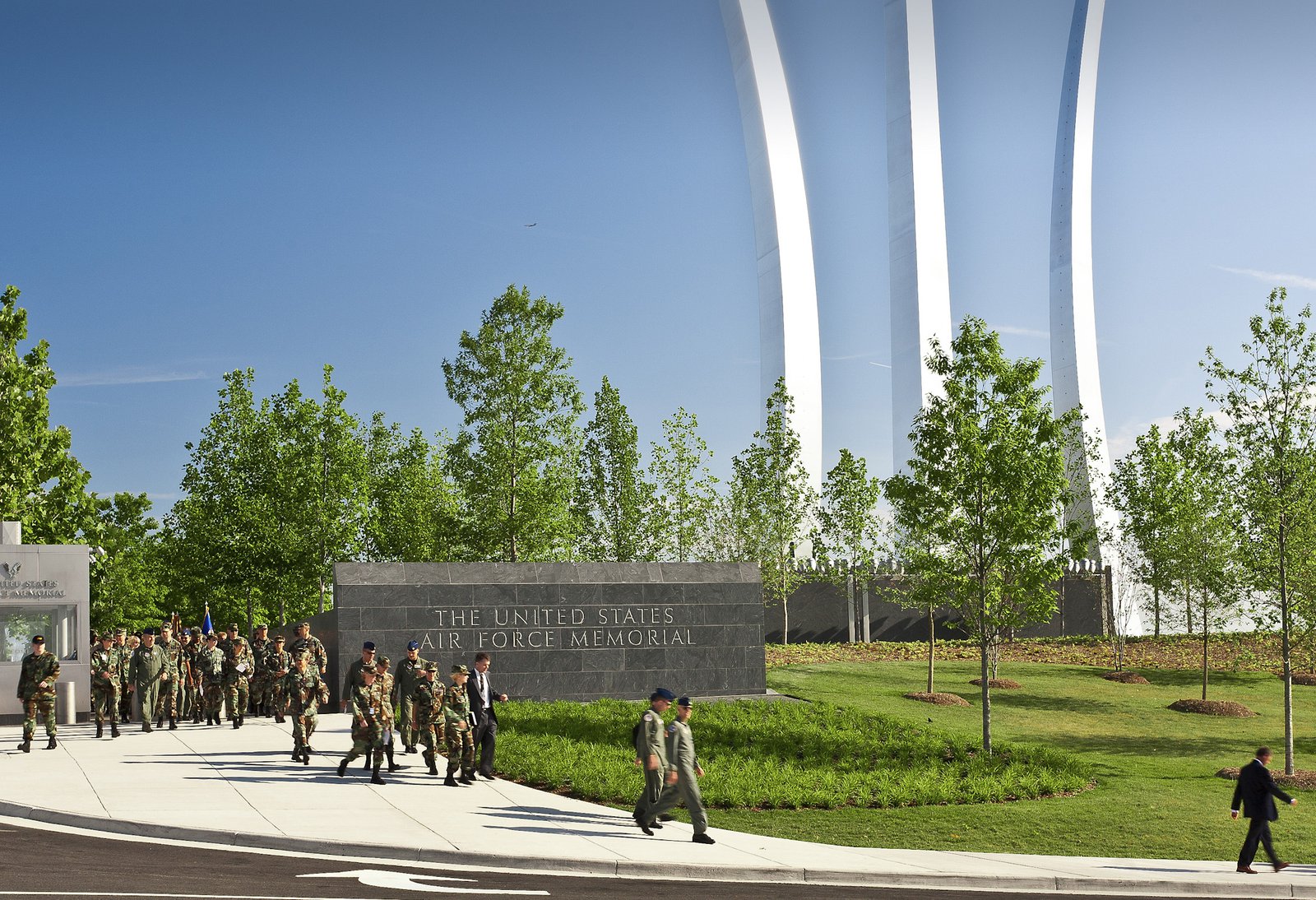
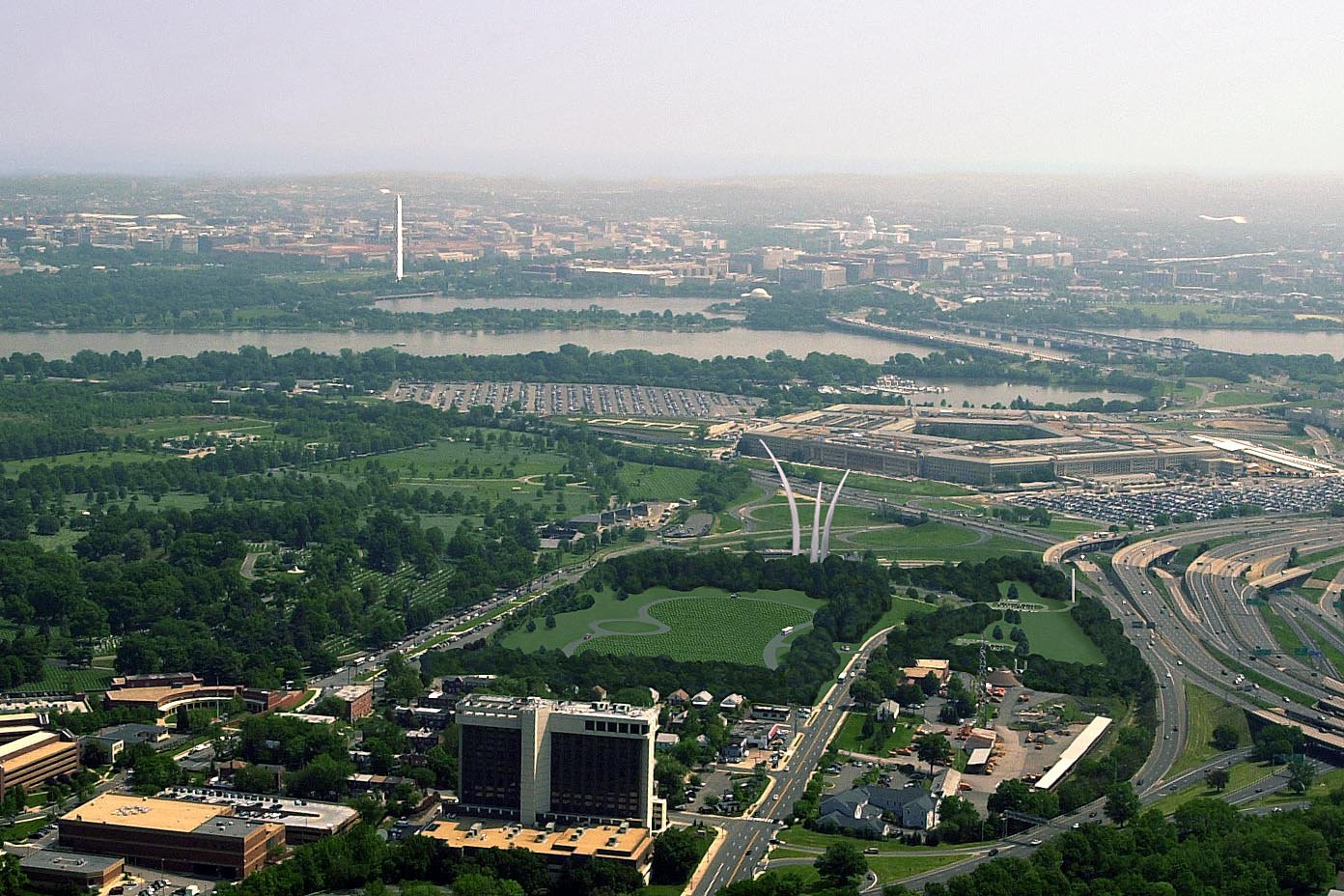
Overlooking the Pentagon from the crest of a promontory, the memorial honors aviation pioneers, both celebrated and unsung.
Unlike the Navy, which has water as its medium, or the Army, which has land, the medium of the Air Force is air, invisible and difficult to articulate. The design challenge was thus to make air palpable while simultaneously evoking the technological advances on which the Air Force depends. The essence of the memorial is flight.
Show Facts
Site
3 acres on the Naval Annex promontory
Components
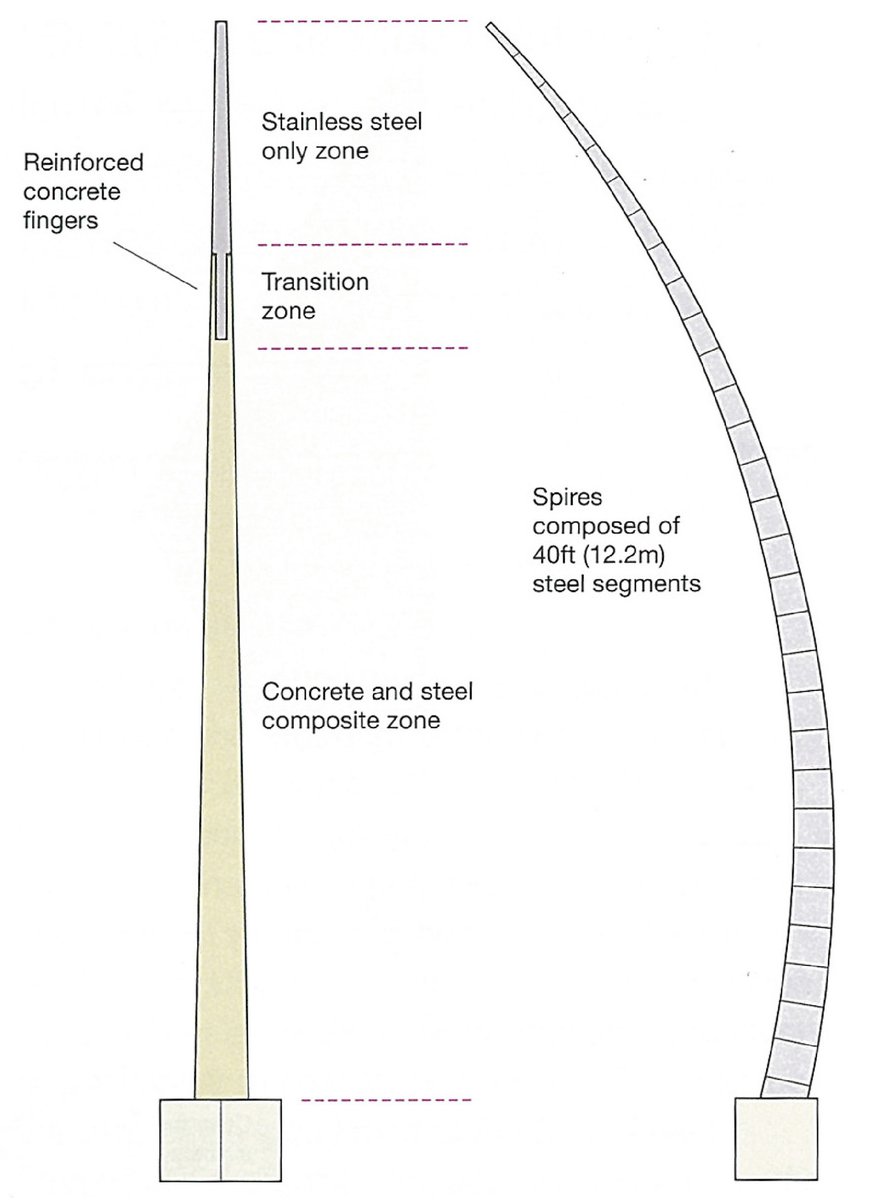
20,000 ft2 / 2,000 m2 gross area; Memorial entry gate; 3 spires (270, 231, 201 feet high); translucent glass Chamber of Contemplation; inscription walls; bronze Honor Guard; parade ground; stepped stone plinth for seating; ceremonial pathways; significant planting; vehicular roadway and turnaround; parking; service structure
Client
Air Force Memorial Foundation
PCF&P Services
Architecture
lead designer
Awards
Gill Robb Wilson Award
Air Force Association, 2006
Award of Excellence
American Concrete Institute, 2007
International Illumination Design Awards: The Paul Westbury Award for Outdoor Lighting Design: Award of Distinction
Illuminating Engineering Society of North America, 2008
Lumen Award: Award of Merit
Illuminating Engineering Society of North America: New York City Section, 2008
Certificate of Merit for Excellence in Construction
Associated Builders and Contractors: Metropolitan Washington and Virginia Chapters, 2007
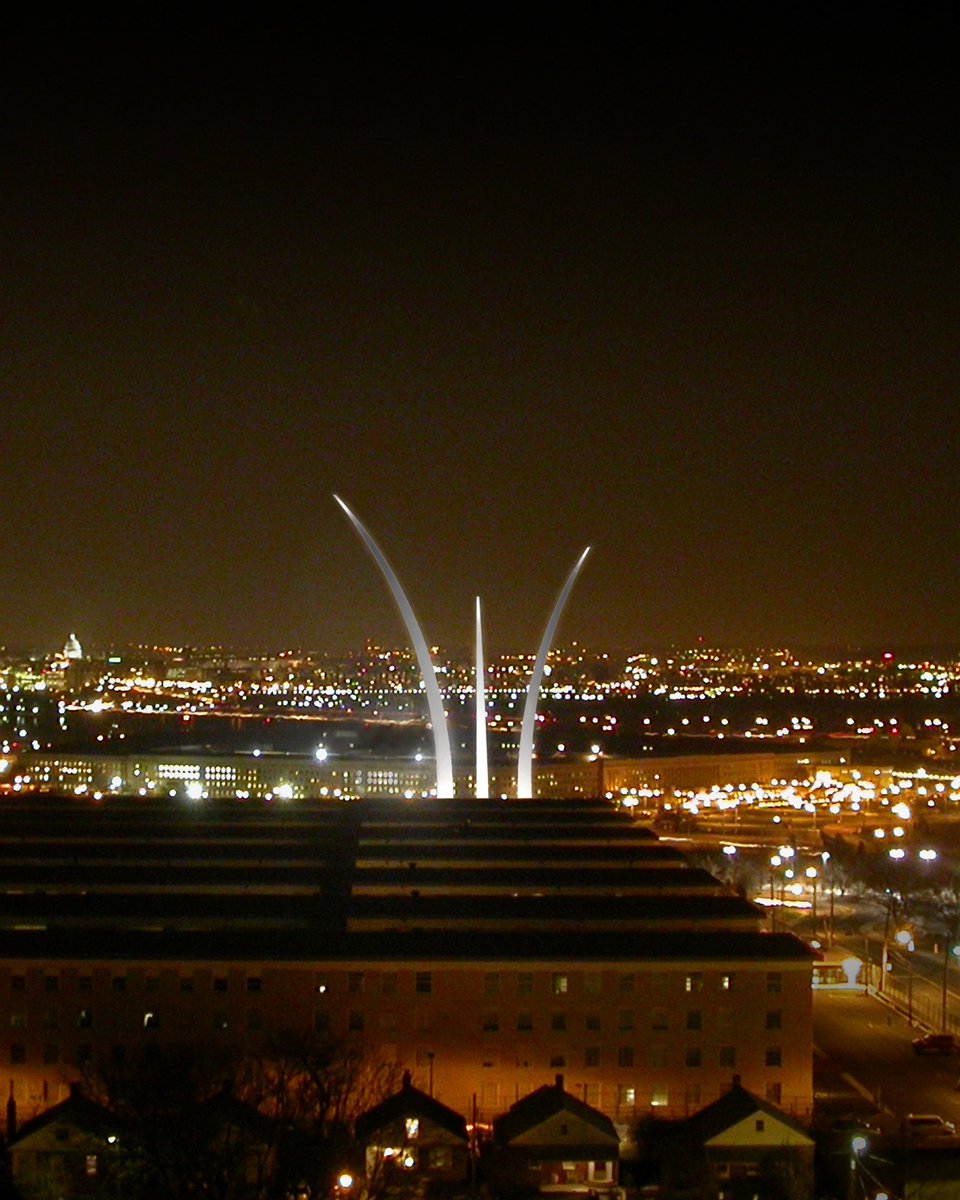
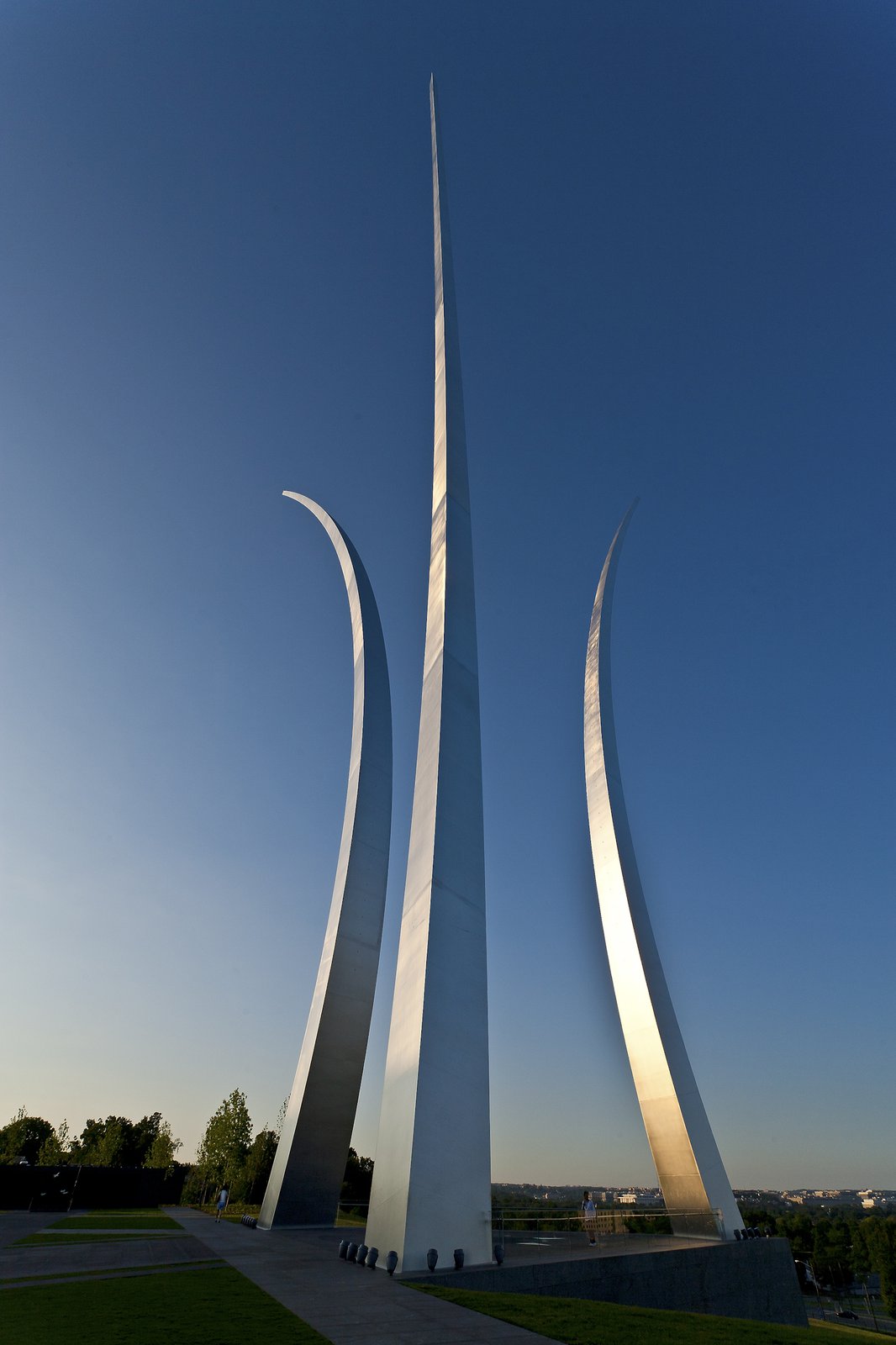
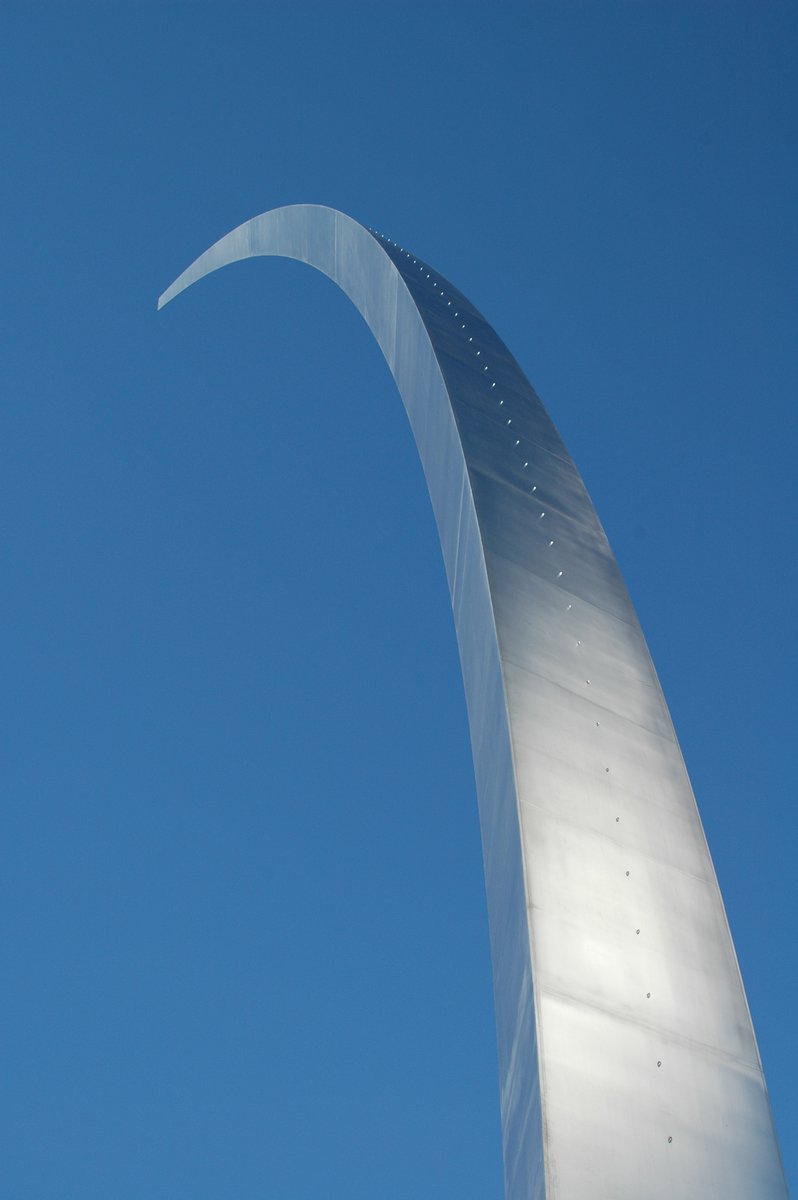
The memorial rises asymmetrically in three stainless steel spires that soar to heights of 270, 231, and 201 feet. The appearance of the arcs changes dynamically with the viewer’s location, the weather, and the time of day. At night they are illuminated from the ground, with their tips brilliantly lit for drama against the sky.
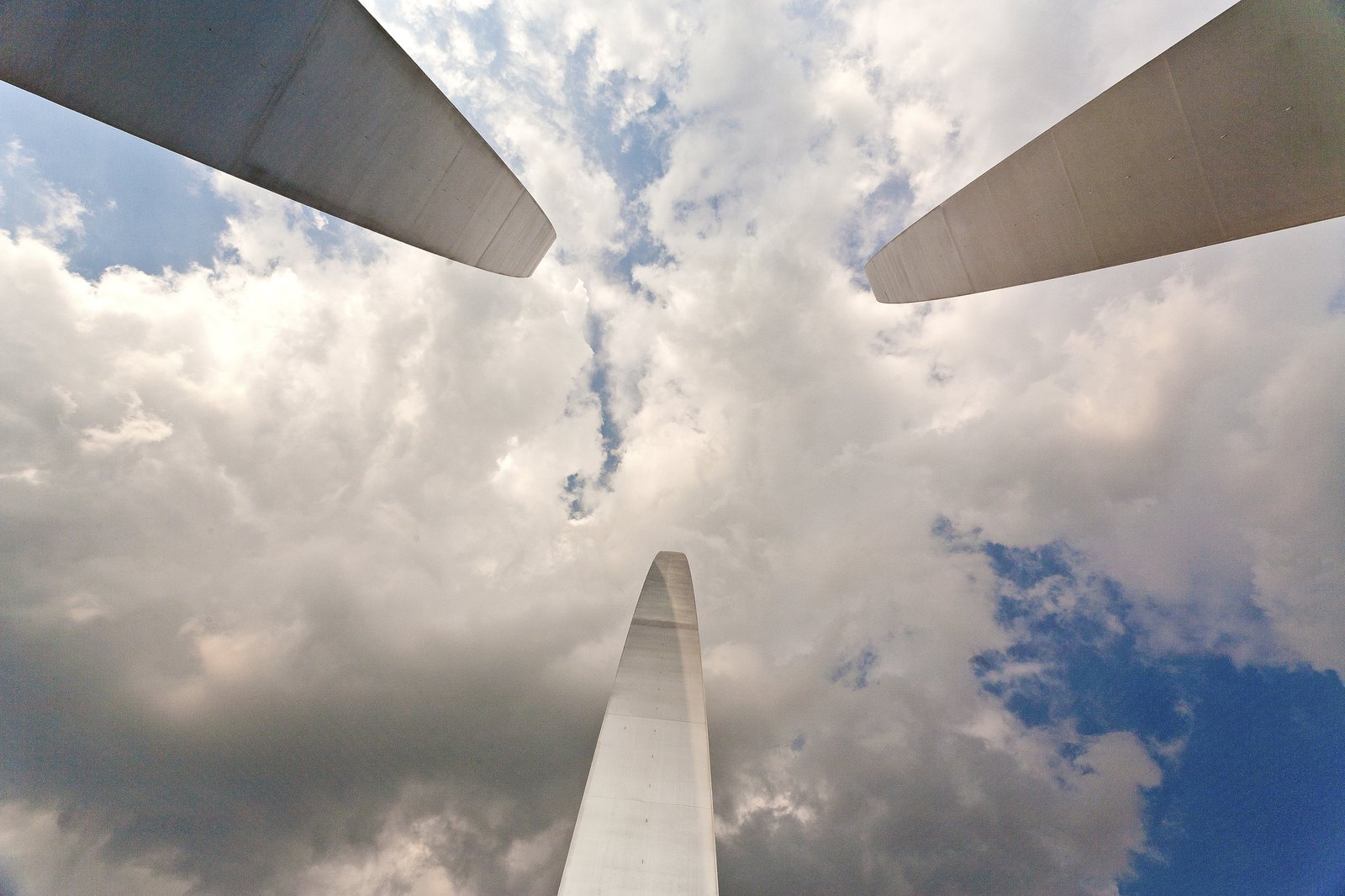
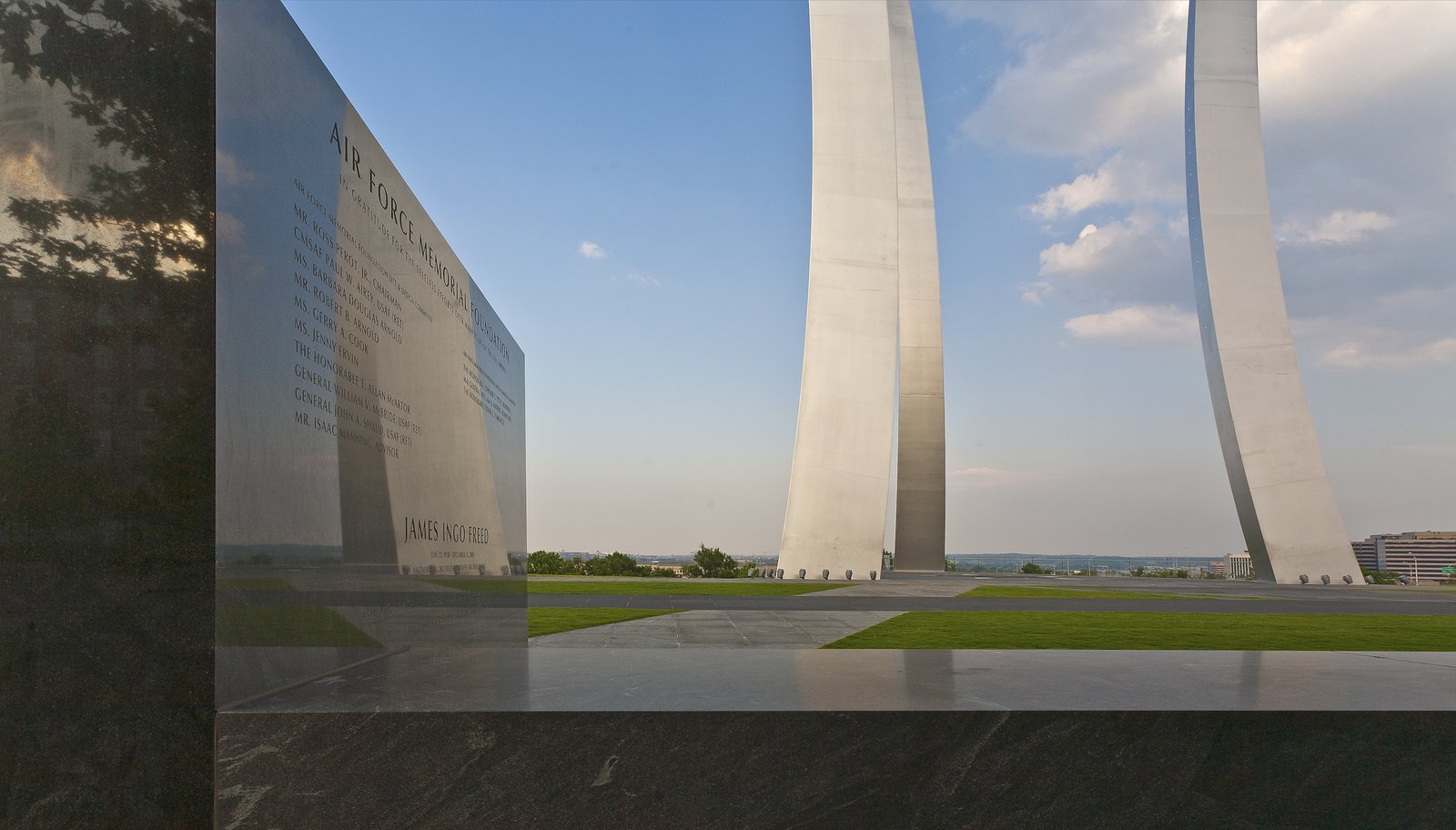
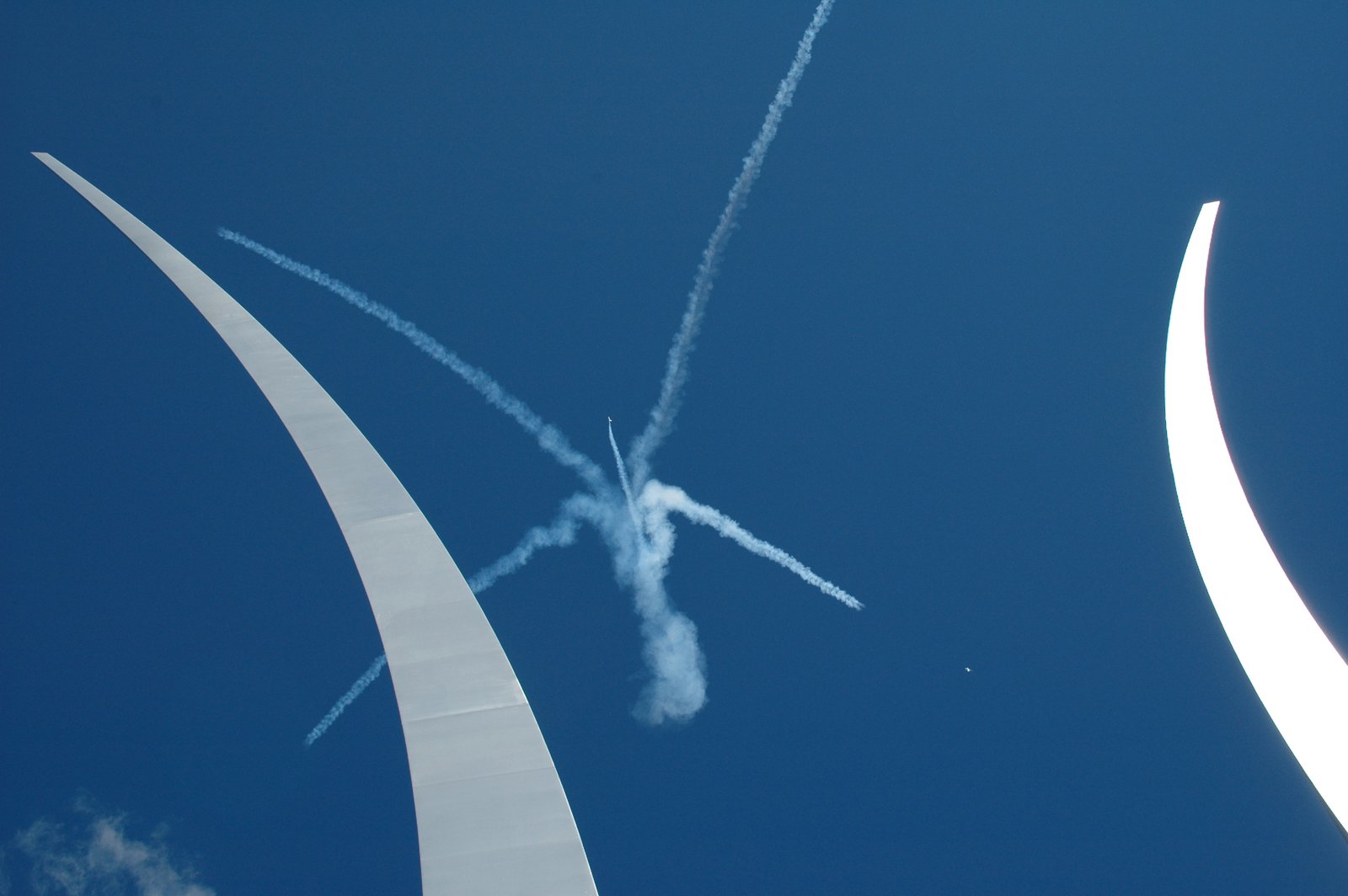
Inspiration was drawn from the contrails of Air Force Thunderbirds as they peel back in a precision bomb-burst maneuver.
Project Credits
Sculptor: Zenos Frudakis, Philadelphia; Engineers: Ove Arup & Partners, New York; Landscape: Olin Partnership, Philadelphia; Lighting Designer: Office for Visual Interaction (OVI), New York; Traffic: Wells & Associates McLean, VA; Civil Engineer: VIKA, Inc., McLean, VA; Environmental consultant: EDAW, Inc., Alexandria, VA; Images: Patrick S. McCafferty / ARUP, Pei Cobb Freed & Partners